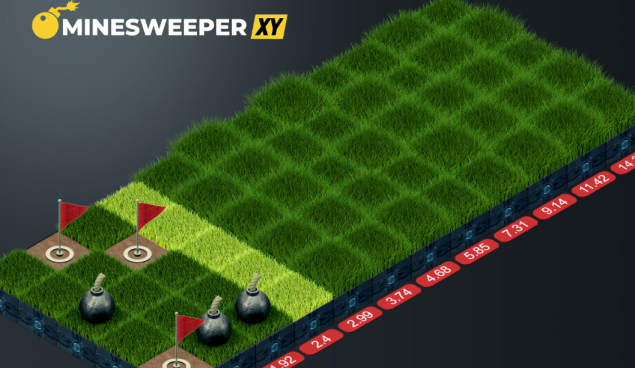
Minesweeper Gambling With Bitcoin
There are several features you will need to consider when choosing a Minesweeper bitcoin game. These include Auto bet function, Difficulty level, and Randomness. You should also consider how much you want to bet on each game. In addition, you should know which Bitcoin casinos offer minesweeper gambling games.
Minesweeper Bitcoin Game – Auto bet function
The auto bet function in Minesweeper is an option that allows the player to set up different bets and select how many squares they want to clear. It also allows players to choose different strategies, such as placing a single mine. However, not all crypto casinos support this option, so players must manually select squares to clear.
Minesweeper Bitcoin Game is a fun and challenging game, and it is a great way to relax and unwind after a long day. Minesweeper games come in different variations, so you can choose the one that suits your tastes best. You can choose to play with a single mine or bet up to a thousand in a single game, depending on how risky you are.
The auto bet function in Minesweeper can be extremely helpful for players who want to maximize their chances of winning the game. The objective of the game is to find as many mines as possible, and to win. In addition, it is possible to build an artificial feedback system that rewards agents only if they complete their tasks. If you want to create a game that allows you to make the game more interesting, consider designing an artificial feedback system.
Auto bet functions in Minesweeper Bitcoin Game can save you a lot of time and frustration. Regardless of your skill level, using the auto bet function in Minesweeper will help you to play faster and earn more money. It will save you from hours of searching for the right site.
You can play Minesweeper in various difficulty levels and settings, depending on your skill level. There are three different levels, including beginner, intermediate, and expert. If you want to increase the difficulty, you can also select a customized difficulty level. If you have a specific difficulty level, you can also create a custom level using a macro.
Minesweeper Bitcoin Game – Difficulty levels
There are three different difficulty levels in minesweeper gambling. There is the beginner difficulty, the intermediate difficulty, and the advanced difficulty. The difficulty level is determined by the number of mines and the size of the board. The optimal spot to click on the first time is in the middle of the board.
Choosing a higher difficulty level will increase the rewards. In addition to luck, players can use other strategies to improve their chances. For example, they can use a flagging board to reveal hidden mines. This will improve their chances of guessing correctly. A higher difficulty level also has more mines than the intermediate difficulty.
The original version of the game was not released until 1998. The game was developed for Windows 98 and has three difficulty levels: expert, intermediate, and beginner. Some versions offer custom difficulty levels. In addition, the game is available in several formats. In the classic version of the game, the goal is to uncover all tiles that do not contain mines.
Although the game is addictive, there are many benefits to playing it. It can help improve problem-solving skills and teach valuable life lessons. Furthermore, it can keep you mentally active and calm. Therefore, it’s a great game for all ages. Just like the other games, minesweeper is a great way to improve one’s well-being and improve your mental health.
Although the game is highly addictive, it requires strategy and logic to succeed. Players must use logical thinking and calculate every move to achieve victory. In addition to strategy, players must practice their accuracy. The more accurate they click, the higher the rewards they receive. However, some people are not concerned with accuracy. For this reason, it’s a good idea to buy lottery tickets as soon as possible.
Randomness
Randomness is an important factor in Minesweeper gambling, but there are ways to increase your odds of winning. First, you can learn the layout of the squares, which can help you make educated guesses. Secondly, you can use the Auto Bet function to place several bets at once. Lastly, you can use Random Fields to reduce your risks. You can find these options in the Minesweeper settings.
The more fields you have to pass through, the lower your chances of landing on a mine. If you can clear a whole field of mines, you will win the highest prize. Therefore, it is best to choose a grid that you enjoy and trust your instincts. You can also try changing the number of mines.
Another way to increase your odds of winning is to increase the difficulty level. There are three difficulty levels: easy, medium, and hard. The difficulty level will determine the size and number of mines on the board. Usually, it is best to start in the middle of the board, as that is the most optimal spot to reveal squares.
The game can end in several scenarios. The player can win by uncovering a mine, clearing the entire field, or cashing out. Those who are risk-averse can opt to cash out at three times the multiplier. However, this method is more risky and will cause players to look for lucky fields.
The use of randomness in minesweeper gambling can also increase your chances of winning. There are different kinds of randomness in different games. Among these, the randomness feature allows you to select a single field or multiple fields with Auto Bet. This doesn’t guarantee winning, but it helps you discover more mines.
Minesweeper is fun, challenging, and extremely addictive. As with any gambling game, it is important to practice patience and learn the game in order to increase your chances of success.
Bonuses
If you have played Minesweeper, you’ve probably received bonus coins from time to time. The amount you can get from these bonuses depends on several factors. In most cases, you’ll receive one free coin for every five days you spend playing. You’ll also be awarded coins if you complete certain challenges, and you can unlock additional challenges by playing in premium mode.
If you’re looking for extra ways to earn coins in Minesweeper, you can flag tiles that contain mines. This will prevent you from accidentally touching suspect tiles. If you place all your flags in the right places, you’ll see a green check button appear. When this happens, the non-flag tiles blast away. However, flagging doesn’t guarantee a higher score.
Another way to get Minesweeper bonuses is to join a bitcoin casino. The Bitcoin version of the game has a low house edge. Therefore, it’s possible to win big and get on a winning streak. However, you need to make sure you’re not in a rush to play. Otherwise, you might end up signing up for the first Bitcoin casino you come across.